Feeds:
Posts
Comments

Archive for the ‘REFLECTIONS’ Category

People talk about the difficulties of youth – their struggle to not only find themselves, but settle on goals and work towards them. Once done, they think there is nothing but smooth sailing ahead, particularly if a few darling little children have already rounded out and enriched their lives.

Don’t be embarrassed by your naivete. I felt exactly the same way at your age. Life was full of promise. Because we’d had some heartbreak in our first few years of marriage, I firmly believed our share was spent, that life could only get better from that point on. It was self-delusion in its grandest form and it predicted a perfect future.

I’m here to be a wet blanket, someone to tell you what you don’t want to hear – at least I didn’t want to at your age. The truth is this. You can set goals and plan and do all the right things, but if you grow too comfortable and rest on your laurels, your nice little life can all be pulled out from under you in the blink of an eye. In the worst of cases, your health or that of a loved one can fail. Sometimes, it’s one or two bad decisions on your part; sometimes it’s the people who decide you’re not “right,” and work to make a case against you. Often it’s the young up-and-coming executive who decide to protect his ass over yours. Yes, some people lie or choose to forget the truth, even people you thought were your friends, because when push comes to shove, the future of their career is usually more important than yours anyday, dear friend.

Hence, this poem written a few years back about a similar person who single-handledly started the 8-ball ruling that triggered the end of my husband’s corporate career.

MR. POLITICALLY CORRECT

He is really nothing special,
down deep feels it too, you know,
so he’s learned to play the charmer,
see how far the game can go.

His shoes are always shiny,
his suit pants nicely pressed,
his golf score breaks a ninety,
his very life seems blessed.

He flatters all the ladies,
he “yes, sirs” all he can,
finds a way to flee the radar
when the feces hit the fan.

He knows to smile when needed,
seems modest with his blush,
feigns innocence to save his hide,
maintains his Midas touch.

He’s young and climbing upward,
he’s old and scared to fall,
friend or not, you can’t trust him,
when his back’s against the wall

A year in employment limbo, a downsized positon where he was set up to fail, and finally, the pink slip. Six years later and we’re still feeling the effects, both monetarily anad psychologically, of that one momentous loss.

When you’re young, you can start out on a path where it seems you are invincible. Employers convince you that you have a brilliant future ahead of you as long as you “stick with the programme, and toe the line.” It’s a horrible thing to suddenly realize that you’ve planned poorly; that you’ve underestimated everyone else’s ambition and overestimated their loyalty to you. You’ve suddenly missed the boat; that in the game of musical chairs, you’re one of the people left standing. What’s even worse is knowing you’re 58 or 59, and your chances of regaining what you’ve lost are unlikely.

The one good thing we have gained, though, is that we’re much more realistic now. We’ve been through hell in the past six years and proven we are tough enough to endure just about anything. It’s a difficult transition, not knowing what comes next. We just have to rely on ourselves to make something happen, because it’s more and more obvious every day that no former colleague is going to turn this situation around and make it right for us. In fact, former colleagues seem to avoid us, perhaps victims of survivor guilt. For one or two people, it’s possibly even justified.

Everyone thinks it’s hard for young people who are just starting out in the work force, but at least they have years ahead, to win through trial and error. We have no time to waste, no time to completely fix what’s wrong.

I just keep telling myself “if it is to be, it’s up to me.” If we all say that, something good has to happen, don’t you think?

Read Full Post »

215603682_5b2272c0feI haven’t posted a blog entry for over two months now, and you’re probably wondering if I’m just one of those “fly-by-nights” who start blogs with lofty intentions, then abandon them. I promise you, that’s  not what’s happened. It’s “life” that’s gotten in the way, and while the mess and stress of it has given me lots of inspiration, guilt has stood squarely in the way of me sitting down to write.
I envy writers who are able to practice their craft no matter what is going on in their world. I find that “fiction” becomes an impossibility, and the non-fiction I want to write is just too close to home. There are others who would be affected if I wrote about all that’s going on around me, and the last thing I want to do is have them embarassed by my willingness to “bare all”  in my writing.

Recently, I watched a couple on Oprah talk about their downturn since the recession. He was a newscaster, earning well over $200,000 a year. He lost his job due to downsizing and they were quickly in trouble. Now he works as a veterinary assistant, making just $30,000 a year, and he’s happy.

I guess the fact that he’s well-known was the “hook” to draw viewers. It certainly wasn’t because he and his wife had suffered more than others; but they had suffered nonetheless, been humiliated and forced to gratefully accept bailouts from friends. And I thought to myself, if they can go on Oprah and talk freely about what has happened to them, why should I be so hesitant to go public with our ordeal?

To tell the story properly, though, I have to go way back to the beginning, when life was less complicated, and all things seemed possible, as long as you worked hard enough.

Read Full Post »

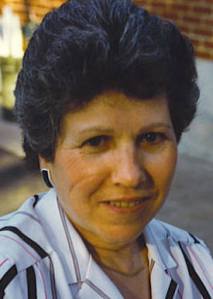
Mom smallerJune 6th., 2009

Today is my mother’s birthday. If she were still alive, she would have been seventy-eight years old now, and I have no doubt she would still be impressing us with her fortitude and personal faith. It’s something rarely seen anymore. Nowadays, such conviction is not just suspect, but often an irritant. How can we trust someone who seems to have all the answers to life’s mysteries? Yet, while my six siblings and I were little, those explanations, told to us as she ironed clothes or baked cookies, formed a solid blanket of security around us, and helped us embrace events that normally would have brought childhood dismay. For that, I am grateful.

As fate would have it, Mom lost her own mother at a very young age, and was sent by her less-than-nurturing father to a convent school at the impressionable age of twelve. She was bright and headstrong, and the only girl in a family of hard-drinking, hard-fighting older brothers. There was a new stepmother, and life at home was growing steadily more difficult. What could be safer and more respectable than a Catholic convent school?

It was exactly what my mother needed to put structure and meaning into a life that was sometimes chaotic and dysfunctional. The world of the convent was a simple one: a time and place for everything; a logical explanation behind every rule; a common goal of discipline and purity; and above all, faith in a higher power.

My mother loved it, and in many ways, those very strict, proper nuns were the closest she ever experienced to mothers in her teenage years. She did well, graduated from grade twelve at fifteen years of age, and within two months had been appointed teacher at the one room school in her hometown. All of that helps explain why she found it so easy to profess her beliefs to others, without being self-conscious, without wavering. It also must have been an asset in later years, when there were seven children of her own asking her to explain the meaning of life and death and everything in-between.

That’s what I find myself thinking about today, on what would have been her birthday. I find myself hearing, all over again, the things she told us.

We asked her why God allowed people to suffer, and she told us that life’s tragedies were not God’s doing, but the result of living life in an imperfect world. She said that somewhere, God was crying for us just as we were crying. She reassured us that God had a special place in heaven for all people who had lived hard lives on earth. Best of all, she said that when we died, we would discard the ailing, aging bodies we had on earth, and magically transform into beautiful, angelic spirits. She said paradise had every wonderful thing that we’d ever loved in our lives on earth, and that there would be nothing but perfect happiness there.

I’m not sure if her interpretation of heaven was altered for the sensibilities of children, but it gave us great peace. Now that I am older, I often yearn for that wonderful reassurance of a perfect afterlife, especially on a day like my mother’s birthday.

Read Full Post »

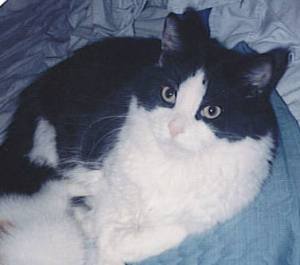
casey-the-gentle-giant6

LOSING CASEY (2006)

We are a family of cat lovers, and the one we love most is dying.

His name is Casey.

For over a year, Casey has not been well, but we are stubborn owners, and we have faithfully medicated him and pampered him to prolong his life. We have tried to believe in miracles, and sometimes, Casey has almost convinced us we should. Finally, he has developed an illness that is stronger than we are. He has cancer, and we know his time is short.
Once a giant furball of nearly twenty pounds, he is now less than half that. Steroid medication is the weapon of choice as we fight this newest enemy. It boosts his appetite, but only makes his death all the more inevitable: despite having a voracious appetite, his body is wasting away.

We’ve finally agreed that soon we must call our compassionate veterinarian and arrange to end Casey’s life. We’ve decided to keep Casey here on the property he loves. We will build a cedar box to hold his body and bury him under a shade tree at the back.

Casey hasn’t moved much in the past two days; has, in fact, just stayed in his bed downstairs and left only to walk the short distance to his litter box or his food and water. But tonight we decided to take his bed outside and let him enjoy the outdoors for a while. We placed the bed on the deck, his food nearby. We did not expect him to stray. We underestimated his will.

Within five minutes he managed to leave the deck and we found him lying in the thick grass near the neighbouring farmer’s field. It’s always been a favourite spot of his, a place where he could spy mice or butterflies, a place where he could explore for hours. I shook my head when I saw him, amazed that he was able to walk that far. My husband told me not to worry, that Casey wouldn’t go anywhere else, and he left for his soccer game.

Several times I checked Casey in the next half hour, and he hadn’t moved. When it started to grow dark, I went outside to bring him in and spotted him turning the corner around the shed near the neighbour’s field. He was no more than seventy-five feet away. He was moving slowly, and I didn’t expect him to go far.

I was wrong.

By the time I got down the deck stairs and to the spot where I had seen him, he was gone. There was only one place he could be, and that was in the farmer’s field of tall hay. In the distance, I could hear another farmer who had already begun harvesting. All I could think about was the idea of Casey dying deep in that field, then being chopped up by a harvester.

I began to call his name, walking up and down the fence that divides the farmer’s land from ours. Our other two cats, Cleo and Gypsy, came as if to join me in my search. I grabbed a flashtlight and a bag of dry cat food from inside the house. My left hand shook the bag of cat food up and down, the universal call to cats to come and eat. My right hand held the light, and with it I pushed the deep foliage and hay aside best I could, aiming the beam towards the dense roots. It was too dark to climb the fence and try to make my way through the hay myself. Instead, I called his name over and over, shook the bag harder and harder. I listened for his “meow,” but in the past few days it had been barely audible. And I realized that if he found the strength to make his way into the farmer’s field, he likely didn’t have strength left to answer by meowing, let alone make his way back to our home.

Suddenly grief overwhelmed me. The image of the dead baseball players walking into the farmer’s cornfield in “Field of Dreams” played through my head. Casey was walking into his field, and would not come out again. It fit in perfectly with the almost “mystical” quality we’ve always seen in him, the feeling that he was more than just a cat.

I searched for over an hour, until my bad knees were cursing me and my tears had exhausted me. Then I came inside, accepting the death Casey had chosen, but dreading having to tell my family. I sat at my computer, wanting to say something, but feeling too tired and a little foolish for my emotional outburst. And I said a prayer, just a little one asking that he come back, so we can be nearby when he dies, so that we can lay him under the shade tree.

Resigned to the loss, ten minutes later I walked back outside to call my other two cats inside for the night. The deck was dark. I flicked the outside light on, and there was Casey, in his bed, looking up at me as if to say “You needn’t have worried. I made it back.” I picked him up and cried my relief into his fur.

I ask myself why the death of a pet can be so hard. Perhaps it is because those of us who believe in an afterlife don’t see death as permanent; we tell ourselves we will see our loved ones again. But no one talks about the pets that have won our hearts throughout our lives. No one mentions an afterlife for them. There is no promised reunion.

People will say it is silly, that I must be unbalanced, or at the very least neurotic to have such a reaction tonight. After all, he is only a cat, they will say.

But then I remind myself that they don’t know him, so how can they possibly understand?

EPILOGUE

A few days later, we knew it was time. As much as he wanted to get outside and lie on the grass, Casey could no longer walk.

He was upset on the way to the vet, but too weak to protest very much. When we brought him to the back of the hospital, near the operating room, he sensed something was up. We placed him on the examination pad and he even lifted his head, wondering about the light that was shining down on him. He was very alert, looking at each of us as we spoke to him. The end was very peaceful for him.We wrapped him in the towel we’d brought and took him home.

My husband had already finished his coffin just before we left. My son found a large amount of blue velvety blanket cloth, the kind they use in expensive hotels. We took apart an old pillow to pad the interior and I cut the blanket to line the coffin’s top and bottom.

I shampooed his fur and blew it dry to make it fluffy. I told myself that people would think I was nuts, but doing it felt right. He deserved it. He was the most fastidious of cats before he was sick, and I’m sure he hated feeling so dirty and unkempt in these past few months.

Casey barely fit into the coffin. He died at little more than 7 pounds, his normal weight being close to twenty. He was such a long cat that the coffin couldn’t have been an inch shorter.

We picked flowers and lay them in the coffin around his head and feet.

My son and husband dug a grave next to the hedge at the side of our property where Casey liked to sleep, the same place he’d disappeared to that night. The ground was really hard and it took hours to get it deep enough.

By the time he was buried, we were emotionally exhausted. Maybe it’s because we give ourselves permission to mourn our pets the way we want to, whereas when we lose people we love, we try to put on a brave face. We worry more about upsetting the person who is dying, as well as others around us. We also are fully aware of the person’s suffering, and we can’t bear to see that. And if we are religious, we find comfort in knowing they are going to a better place.

It is different with a precious pet. Watching Casey suffer, knowing that he didn ‘t understand why it was happening, was heartbreaking. Part of us went with him. We can only hope that it’s true what some people say, that our darling animal friends are part of our afterlife, and Casey is there waiting for us, eager to play again.

Read Full Post »

cheese-bun1This is an oldie, published in Moondance: Celebrating Creative Women in June of 2004. While we deal with the current recession, I can’t help but think of it again, and remember that we are often luckier than we realize.


Once in a while, when I’m feeling particularly blue and disillusioned with life, something happens to open my eyes. Call it an epiphany, if you will, but it’s a blessing for which I’m thankful.

Not too long ago, I had such an awakening. We were riding the tail of a very stressful month, filled with uncertainty and worry around recent employment changes, and emotions in our home had run the gamut. Finally, we decided to shake off the negativity that enveloped us, and recapture some of our usual fighting spirit. Whatever fate brought, we would focus on what was right in our lives, rather than worry about what we couldn’t control.

That night, the wisdom of our decision was proven to me in the guise of a solitary woman who stood behind me in the grocery store. I had come for just a few items, but being a bargain hunter by nature, I had taken advantage of mid-week bargains. I placed my carefully selected items on the grocery belt; two cases of Coke, two containers of ice cream, and two bags of potato chips, far from necessities, but all discounted; inexpensive laundry detergent; cat food; milk; bread; three bags of coffee. As I faced the the cashier scanning the bar codes, my eyes glanced left and downward and were drawn to pair of feet wearing flowered neon pink socks. The only protection between her feet and the cold November ground were a pair of cornflower blue flip flops.

From the corner of my eye, I gazed upwards. Bare legs, a printed skirt and shirt, and over it all, no coat, but a transparent green hooded raincoat. She stood ramrod straight, a large rectangular floral bag gripped tightly in her hands.

Must be eccentric; maybe an artist, or even a writer; someone who cares little of outward appearances, I thought to myself.

I handed the cashier the money for my purchases, and the woman placed her order on the belt: a single cheese bun.

“That will be fifty cents please,” I heard the cashier say, then “Do you want a bag?”

“No. Thank you anyway,” the woman answered, as she placed the coins in the cashier’s hand.

From over my shoulder I turned quickly to catch a last glimpse of the woman, and then I saw what was not apparent at first. For she didn’t wait until she was outside to hide her hunger from the rest of the world; there, in the suburban grocery store, she began to eat.

In that second, I knew the truth, and I sensed her shame.

In the parking lot, I quickly lost sight of her as she moved on foot between the cars. I wondered how far she had to travel on such a cold night, dressed so poorly. Then I looked down at my own clothes: the warm leather boots and brown lambskin coat, my carefully matched purse and gloves. I opened the trunk to my car, still like new, every option possible, all shiny black paint and chrome and tan leather, insisted on by my indulgent husband. I drove home, her image branded into my memory.

Somehow, she seemed abandoned, a solitary lonely woman. Beautiful once, and would be even now if sorrow and hard times weren’t so indelibly grafted into her skin. Perhaps younger than I, but I couldn’t be sure. Long, gently curling hair. Clear blue eyes which stared straight ahead. Tall and slim, good bone structure, she could have been a Hollywood actress on a set. But this wasn’t Hollywood.

Did someone love her once? Had she ever known the joy of a small child’s arms around her, or the warmth of a grown son’s hugs and the words “I love you, Mom.”

Did she one day have a husband like mine, who even then, despite work worries, was home in a cold garage, doing his own version of “Junkyard Wars” to create a closed cabin for his old snow plow? A husband who jokingly calls me “Highness,” who makes love to me and brings me tea, who tells me I’m beautiful and smart every day of my life? Has she ever loved someone who could make her laugh until she cried, who shared private jokes and silly stories with her?

If she did, was the sorrow I sensed the mourning of what was lost?

No matter what else life has dealt me, I have been lucky enough to know such love. I watch my husband from afar, and sometimes, his thick hair, now graying, seems once again the color of honey. The years disappear, and I see the vulnerable boy I fell in love with so long ago.

So, thank you, mysterious lady. You have helped me see once again how truly blessed I am. I hope that some day fate allows you to feel a similar joy in your own heart.

Read Full Post »

42-207336911A short “what if?” piece, purely fictional. Do you ever imagine how your life would change if you suddenly learned you were dying? I do. This is just part of what I imagine regretting.

“Carpe diem.” I know what it means but it’s made no difference. I’ve lived each day, each year on delay, as if I will exist forever. I’ve been Scarlet O’Hara, following the mantra. ‘Tomorrow is another day.” I’ve been a fool.

I’ve been a fool.

Denial is the panacea of the cowardly. Reality is a bitch and the truth hurts, or so says my son’s latest tattoo. Delusion, whether drug-induced or a natural inclination, is gentle. You tell yourself that people are rarely as cruel as they appear; that the dangers of global warming are exaggerated, that good always triumphs over evil; and as for death? It’s so distant that it doesn’t bear thinking about. That’s the way I’ve lived my life, until now.

Within a few short weeks, I will be dead, and I am suddenly overwhelmed with regret for the time I have wasted, for the work left undone. I will never accomplish all that I expected to. I will never know what it is to have my dreams fulfilled. I foolishly pushed them to the back of the shelf, waiting for just the right moment to speak them aloud and bring them to life. They will die with me.

I try to turn onto my side but tubes and sterile tape make it impossible. I moan in frustration, rage inwardly at this turn of fate. I want to say something brilliant, something so enlightened that it will make my creator stop and say “The world needs her. Let her stay.” Instead, foolish clichés fill my thoughts.. ‘My ducks aren’t all in a row. There are fences yet to be mended. Not enough bridges have been built. I still have fish left to fry.”

I am not ready to leave.

I lower my head and whisper my deepest truth: “There are stories I need to write.” A searing pain rises in my chest and it hurts to breathe. Is it the cancer that eats away at me, or is it the words that will be forever buried?

I have no one to blame but myself. For years I allowed everything and everyone else to come before my writing. When I put words to paper, I tore each sentence to shreds, rewrote, revised, recycled and picked at my writing until nothing remained of me. I was uninspired, overly critical, unable to find my focus amidst the distraction of my life. My muse fled, licking her wounds. I told her to be patient, to wait for my “someday.” How could I know that “someday” would never come and that my thoughts would die with me?

When I was still a teenager, I read “The Prophet,” until I could recite parts by heart. I loved its wisdom, the purity and simplicity of its language and truths. “Your children are not your children. You are the archer. They are the bow.” I dreamed of writing a book like that, one that would be passed from friend to friend, from parent to child, one that would live long after I was gone.

I wanted to touch children in a way that mattered. Like Barbara Parks, I would write a story that would make them laugh but teach them compassion. I think now of the first time I read Barbara Parks’ book, Skinnybones, to a group of nine year-olds. There were times I had to stop and regain my composure because I was choking with laughter. Such a gift, to be able to make children and grownups laugh, all the while teaching respect for our differences. I longed to write like her.

I wanted to write about unlikely heroes, unveil a perfect multi-dimensional character, my own “Holden Caulfield,” someone whose layers could be slowly peeled away, earning him or her a place in the hearts of my readers. I wanted to write a character that would make people cry with laughter and laugh through their sorrow. I wanted to write magic.

I waited too long.

Read Full Post »

humor20105I’ve heard it said that comedians are, in their own private lives, not all that funny, that they are often regular “sober-sides.” Woody Allen comes to mind, and I realize I’ve never heard him laugh. No matter what Jerry Lewis says in an effort to be a clown, you just know that underneath it all he’s a bastard.  Ignore the good guy facade. This isn’t someone who cracks jokes in an effort to lighten everyone’s mood. And we all know that some comedians don’t even bother trying to hide their nastiness. Remember Don Rickles?

I say this all because lately, as you’ve no doubt noticed, my sense of humour is seriously lacking, and I’ve not even been able to fake it. That’s scary, because all of my life I’ve been told that I can be rather funny. My witticisms actually made people laugh. Not only that. I’ve been called a “blue-skier,” someone who’s almost foolishly optimistic. What the hell happened? Did my rose-coloured glasses simply lose their tint with the passing of time?

Seriously. Is it my age? I mean, the older you get, the more “bad stuff” invades your life. If something catastrophic happens when you’re younger, you assume that a lifetime of bad luck has simply hit you all in one big chunk, that from that point on, only good things await. At least that’s what my logic told me. Had a rough few years in my twenties and then I figured, “Whew! Glad that’s over with! Now let’s get on with the good life!”

But once you’re older, your outlook starts to change without you even realizing it.  bad stuff starts to happen, sometimes quite regularly. You gear yourself up for the next big blow to you or someone you love. What a way to exist! It’s no wonder no one’s smiling around me!

I try to look on the bright side. I really do. It’s about survival, right? I seek out every bit of good news I can, because otherwise, I’d drown in doom and gloom. There’s been so much of it lately.

I mean, just since my last journal entry a few other gems have invaded my world, or its periphery.  Yesterday, my cousin’s wife, a woman I’ve yet to even meet, was the victim of a “hit and run.”  It started out as a good news story, because she’d been a good samaritan, had stopped to help a woman who’d been struck by a car. For her goodness, she was nearly killed by someone else who drove into her and kept on going: the juxtaposition of her compassion versus the driver’s disregard boggles my mind, makes seeing the light side of anything very, very hard.

Today, we made a last ditch effort to stay financially afloat until our house sells by applying for money from my husband’s locked-in pension fund. It’s under a new government endeavour called the Hardship Accessibility Programme.  There is nothing laughable about that at all, unless it’s as a comedy of the absurd. How surreal is it that we somehow arrived at this point? If we can find a way to laugh about all of this, to make jokes someday and chuckle with our grandchildren about the whole experience, we’ll either be the most well-adjusted people in the world or we’ll have lost our marbles too.

So why the hell am I so fixated on my disappearing sense of humour? It’s because of this blog, actually, and my half-hearted, on again, off again efforts to find a place for myself in the writing world. You see, someone suggested I solicit ads to generate revenue here. Of course, that would assume I’d have a large enough following, a readership that would somehow morph into enough clicks to make a financial difference. And then, the very next day, didn’t I read about dooce.com? For those of you who don’t know, dooce.com is a mega-success, a blog started in 2001 by Heather Armstrong, a young woman (thirty-something, I’m guessing) who’s somehow attracted enough of a following to not only support her family but to garner a book deal, all based on her perspective and comments on life.

Go figure! I had to check her out. It didn’t take long to realize her appeal. It was her style – irreverant, in-your-face sarcastic humour that in our better moments, we are all capable of, but in our weaker moments, we forget.  And I thought to myself, that used to be me, or close to me, anyway. Where did it go?

I want it back. That “edge,” that bit of fight that younger women use to such great advantage. It’s what keeps us going, especially in times like this. It’s what keeps us from feeling and acting like victims. No one wants to be around victims so why the hell would anyone want to read about one? That would be moi, for those of you who haven’t read back enough to recognize the signs.

It’s a lot to think about. But there is one bright spot. In the midst of a stressful discussion, I burst out laughing today, thanks to my darling husband. As we age, I may be losing my sarcastic “edge,” but he seems to be losing his vocabulary. We were talking about a rather negative news item, and he called the person featured in the piece a “well-do-ne’er.”

I laughed until I cried. It’s a start.

Read Full Post »

untitled-human-spirit1Last week,  our close friend passed away. For the better part of twenty years, Janet fought cancer and outlasted the dire predictions of the best oncologists. Despite her frail appearance, she seemed invincible. We regularly compared her to that bastion of commercial longevity, the Energizer Bunny.
What was it about her that kept her alive? Surely, she had to have advice for others. Once, when I asked her for her secret, she answered with one word: denial. As long as she couldn’t see the signs of the cancer in her body, it wasn’t there. She locked the prognosis away, as far from her everyday thoughts as possible, and threw away the key. She decided to live each day on its own merit, and she lived them well. No matter what she was going through, she never lost her passion for people,  for food, for laughter.

Few of us are that wise.  The fear of trouble ahead sometimes cripples us. It doesn’t matter whether it’s about our health or our loved ones or even our finances. Instead of using each day to enjoy what we have, we agonize over what we may lose.

It’s within each of us to find the same kind of strength Janet had.  No matter what we lose, we only need to remember to appreciate the abundance of blessings that still surround us.  If we can do that, then maybe our struggles won’t seem quite so insurmountable.

Thank you for teaching us that, Janet. Rest in peace, dear friend.

Read Full Post »

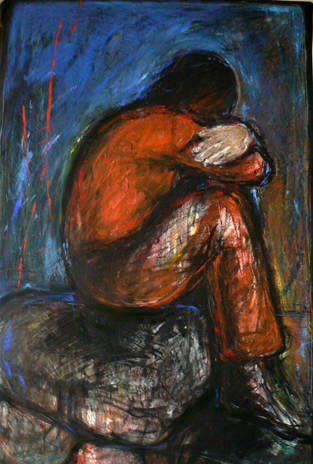
untitled-sadness4Today I visited a friend who’s near death. Her husband and young adult children were in the hospital room when we arrived. For days, they have seldom left her side. They are close enough to hear her whisper her needs. They hold her hand, and she lifts theirs closer to kiss. There is overwhelming sadness. Losing a mother is never easy.

It is late summer, 1998, and an old futon stands sentry at the foot of my mother’s bed. For hours, I’ve lain there awake, afraid to close my eyes, afraid that when she needs me I won’t hear. I needn’t worry. Her first movement knocks a glass of water off the nightstand, and I bolt upright, a sharp pain of alarm in my chest.

Our mother is dying at home, and tonight it is my turn to keep vigil.
I jump to my feet and rush to her aid. My mother lies on her side, a small pillow between her knees to ease the pain of bone against bone. An intravenous line administers merciful morphine into one arm. With her free hand, she reaches for something on the nightstand behind her.

“Are you okay, Mom? What is it you need?” I ask. I grab the hand towel that waits nearby and begin to mop up the water that’s spilled.
“I’m so much trouble for you girls,” she murmurs, as her hand continues to grope blindly for something just out of reach. “The music stopped,” she says, and finally I understand what she wants.

A small compact disc player sits behind the monitor at her bedside. A cord runs from it to a small, flat speaker beneath her pillow. The music helps her sleep. I press “play” and it begins: a concerto of nature sounds and orchestra, melancholy and soothing: Stream of Dreams. A year earlier, when she was still healthy and vibrant, when it seemed she’d live forever, I’d bought each of us a copy.

I glance down at the woman lying before me now. Her skin has thinned to translucence, pulled tight over cheeks grown hollow. I push back the graying curls that have fallen too close to her eyes, eyes now glazed by pain and sometimes confusion. Within seconds, sleep allows her a gentle escape. I switch off the light, and return to the futon in search of rest.At home the next morning, I wander towards the stand where my own music collection is stored. I select the disc, insert it into the player, hesitate for a second then touch “play.” The sound of the music my mother listens to as she prepares to die fills the rooms of my house.

A nearby armchair waits to hold me. I fold myself tight within its embrace, and allow the tears to fall.


Read Full Post »

79686_full-smallerI started this blog with the best of intentions. I enjoyed feeling accountable to my readers. So, what’s happened in the past six weeks?

LIFE.

If I continue on with the idea of life as a journey, the cheesiest of metaphors come to mind: I shifted into overdrive, blew a tire, drove off the shoulder, slammed into a tree. I’m rolling my eyes as I type. But the truth is, in their own way, all of those metaphors apply, some in spades.

My life lately has been anything but calm and predictable. So much has gone wrong around me, in fact, that I find myself almost embarassed to list it all for fear people will think I’m fabricating it, or even worse, that I’m not quite “all there.” And if there’s one thing I pride myself on, hang onto by my teeth, it’s being “all there.”

Early in December, I wrote about falling in the tub and breaking my arm. Controlled person that I am,  I stayed calm.  I stepped out, dried myself off, took a photo of my mishapen wrist, dried my hair a little, plopped a bag of frozen peas on the bulging break, found a book to read while waiting in emergency, called my neighbour and asked if he could give me a lift to the hospital, and poured a coffee into a travel mug for the twenty minute drive there.

I wasn’t prepared to break my wrist, but I wanted to be damned prepared for my time in the emergency department!

When I arrived at 1:30, there were seven or eight people ahead of me, all waiting to talk to the triage nurse and be assessed. It took ninety minutes for me to make it to the front of that line, and another seven hours to be examined and treated, and during that time, I had front-row seats to a bizarre soliquoy being delivered by the patient in front of me. It was obvious that she, unlike me, was not all there. Still, I was a captive audience, and I couldn’t help but feel compassion for her.

She was in her fifties, and likely very pretty at one time. Now, her graying hair was long and unruly, her face pale and surly. She had broken her ankle weeks before and wore a hard plastic walking cast over her pant leg. Today, the problem was not the ankle. It was her other leg. She sat in a hospital wheelchair and imaptiently rolled it back and forth in agitation, occasionally running into the legs of the young woman in front of her.

“I was getting off the bus to visit my psychiatrist and the stupid bus driver pulled away before I was on the sidewalk and knocked me down. I’ve hurt my knee badly. Oh, God, it’s so sore,” she cried.

“I lost my job working in Dr. Martini’s office and now I’m on welfare and I can’t afford a taxi and I don’t even have enough food. How do they expect a person to live?”

Then again, in case someone had missed it before “I was on the bus and the stupid bus driver, etc.”

She went on and on about the things that had befallen her over the past five years, told the crowded waiting room that she’d had custody of her daughter’s child but he was taken away, told us how unfair her previous employer had been.

Eventually, she forgot that her leg was supposed to hurt. She got up from the wheelchair, walked to the security guards, loudly complained of thirst and started swearing about the long wait, about being alone. Someone brought her a can of pop and she started to cry again, big, sniffling sobs interjected by words of gratitude.

That’s when it hit me. Five years before,  she may have seemed like anyone else: likely still attractive, with a job that required intelligence and responsibility. Something caused her to lose it. That either began her downward spiral, or was one of the major steps on the way down.

It can happen to any of us. Tragedies and stresses can bring to the brink. Something within either tells us to hold on, or to loosen our grasp and allow a freefall. I have been hanging on.  When I list the negative stresses of the past five years, I wonder how I’ve held on and escaped her fate. Is it just that my fingers are frozen in  their grip?  Will a time ever come when all I’ll be able to talk about is the litany of things that went wrong?

I refuse to allow that to happen. I’ll concentrate on all that is good around me, because there is so much to be thankful for. I’ll try not to dwell on the stresses around me. I will voice them now, a purging perhaps, but I will not think of them again today, nor tomorrow: the elderly father struggling to master the use of a prosthesis, and being hit with pneumonia three weeks into his rehab; the husband who’s been too often been the victim of buyouts and restructuring over the past five years; concerns over our retirement; the bravery of a dear friend who’s been fighting cancer for what seems like forever; our sadness for her husband, our oldest and best friend; the sudden death of a beloved pet; the helplessness of watching a son’s heartbreak over a broken engagement and another’s uncertainty over a lifelong  career; and my own health issues, now more of a concern by this neverending circle of worry.

Yes, when I find myself obsessing over the things I can’t control, I’ll remember that poor woman in emergency, and I’ll think of my many  blessings. There is a fine line between us, but unlike her, I am not facing life alone. And that, I believe, is what will make the difference.

Read Full Post »

« Newer Posts - Older Posts »