Feeds:
Posts
Comments

Shortly after my last entry, my husband and I learned that we were eligible for a mortgage. It would take a leap of faith on the lender’s part and on our own, because we’d have a higher interest rate than people with solid jobs or flourishing businesses, but we couldn’t let the opportunity pass.

Immediately we started to search in a city where house prices are still affordable, and the commute to Toronto and the outlying areas reasonable. Because we were considering homes at the low end of the price scale, we saw some real disasters. Some were so bad that it would be cheaper to tear them down and start over, rather than try to renovate what was already there. We saw homes that looked wonderful online, but those pictures were carefully cropped to miss the dilapidated homes on the rest of the street, or the fifteen story apartment that loomed behind and put the entire house in its shade. There were a lot of estate homes – easily recognizable by the dated decor and overall neglect of an elderly person who doesn’t have the money or energy to redecorate or renovate. We saw one place we loved, only to be told that the corner three hundred metres away served as home base for most of the city’s prostitutes.

One particular older home charmed us, and we considered making an offer. A closer look showed dangerous undermining of the foundation, and other structural time bombs. Another old place was lovely inside, but the floor was so uneven you’d swear you were hung over as you moved from one room to the next. My husband, ever the optimist, believed he could raise the floor himself. He did the research, then we went back for a second look. That’s when he discovered that the supports at one end of the house were rotten, and that without a mega transfusion of cash, the house would eventually crumble.

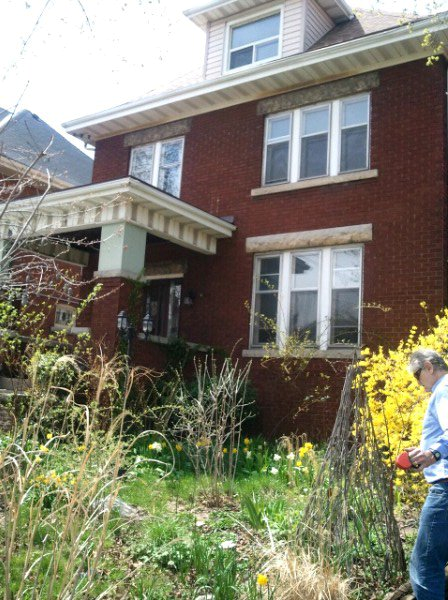
Across the street and down a bit, we found another home – sturdy, stately, with tons of character and original features. It took just one short visit for us to fall in love with it.

The purchase has moved quickly because the house is vacant. I can’t tell you how excited I am. Over the years, we’ve owned three brand new homes, and another that was only six years old when we bought it. Between homes, we’ve been lucky enough to live with a close friend. Now, after two tumultuous years, we are embarking on an entirely new adventure, something we’ve never considered before: a home that’s over one hundred years old, in the middle of a city we are only beginning to know.

It’s a fresh start for us, and it begins tomorrow. Wish us luck.

Today is my sixtieth birthday, and the only way I can describe it is surreal. To give you an idea of just how foreign the number “sixty” is to me, I first typed the title of this entry as “On Turning Thirty.” Even my fingers are in denial.

Unlike my teenage years, or young womanhood, or my years as a wife and mother, this is an age I never took time to imagine. It snuck up on me when I wasn’t looking; perhaps while I was asleep, or stuck in traffic, or playing my zillionth game of Spider Solitaire. Somewhere between forty and sixty, I lost time.

Despite feeling a little shell-shocked, reaching my sixth decade doesn’t bother me as much as I expected it might. I’ve watched so many of my friends die much too soon. How can I not appreciate each day that I am given? I’ve been so lucky. Healthwise, I don’t feel any worse than I did at forty. It may be one advantage of having the aches and pains of fibromyalgia for so long. My age has simply caught up with the way I’ve always felt. The asthma that plagued me at a younger age is under control now, thanks to medical advances. To think I once believed that it would probably kill me someday. I never could have predicted that I’d feel this good at sixty.

Surprisingly, I have developed a fascination with the aging process, as if it’s happening to someone else, as if the person in the mirror is not really me. I study the gradual appearance of lines in my face as if noticing them for the first time. I am spellbound by the skin on my hands, how much thinner and drier it seems. My nails have changed. I wonder when all of it began and why I didn’t notice.

And then there’s my neck.

A few years ago, I watched author Nora Ephron being interviewed on a women’s talk show. She discussed her new book on middle-age, and the procedures some women endure to appear younger. She ended by saying “but there’s nothing you can do about one part of your body.” The title of her book was “I Feel Bad About My Neck.” She was right. And the irony is in knowing that at a time in my life when I prefer to cover my neck, I can no longer stand the heat!

Yes, I am now sixty. I may have to say it again and again until it sinks in. I’d like to think I’m a bit wiser than I was at thirty, but the reality is that inside, I am very much unchanged, with the same values, the same passions, the same sentiments. The greatest difference comes from acknowledging that time has passed more quickly than I ever anticipated, too much of it forgotten.

From this point on, I have to try harder to savour each moment, to make the days count for something. Life is much too fleeting, and there are still memories to be made.

As someone whose life has had its share of ups and downs, I am often asked how I’ve managed day to day living without showing more signs of the stress around me. The question always surprises me, because I don’t see myself as particularly complicated or brave. I simply do what I have to do, and much like Don Draper of Mad Men says, “Move forward.” But there is another coping skill I freely admit to. When faced with a stress that feels overwhelming, I sometimes give myself a break. I lock the problem away “Delay & Denial Depot,” deep inside my brain, and leave it there until I’m stronger. I’ll be the first to admit that sometimes, problems have stayed there too long.

My father-in-law used similar tactics. The older he got, the more he repeated a phrase that irked me no end. It was “I don’t want to know.” He used it whenever the mood hit him. He’d ask a question of you and if he realized he wouldn’t like the answer, he’d stop you halfway and say ‘I don’t want to know.” If a news story disturbed him, he’d begin to comment on it, and midway through his own sentence stop and say “I don’t want to know.” There were variations on the theme. If he felt someone wasn’t giving his opinions the respect they deserved, he’d say “he doesn’t want to know.”

It’s only as I’ve aged myself, and lived through my own trials, that I’ve come to understand his thinking. Many of us “don’t want to know.” It goes beyond ignoring warnings of impending doom if we don’t work harder to save our planet. It also happens much closer to home. We choose not to see what is right under our noses – job problems; issues with our children, substance abuse, adultery, rising debt, health issues – all because of fear. We fear the panic we will feel, the loss of control, if we face the demon head on. We surround ourselves with people who will support our denial, perhaps even share a similar altered reality, because they don’t challenge us on it. And all the time, we fool ourselves into thinking that problems that developed while we weren’t looking, will disappear quietly, the same way.

It’s dangerous thinking. It allows us to be manipulated, because we are deperate to believe these orchestrated “best case” scenarios. It’s rampant: among soccer moms, in company boardrooms, in political office. The more control a person is expected to have, the more perfect he/she is expected to be, the greater the chance of living in denial. As a former teacher, I can tell you that it’s everywhere in the education profession, particularly among teachers who worry more about everyone’s perception of them than admitting they need help. Image become more important to them than the welfare of their students.

We’ve seen a perfect example of willful blindness in the current media fiasco around Charlie Sheen. Somehow, over years and years, he’s been in denial of his condition, and surrounded by people who are too cowardly and/or self-serving to confront him on it. Do the people around him truly not recognize the illness that goes beyond his addiction? Can’t they see it in his eyes and hear it in his words? Do they care so little, or do they care too much to face it?

Margaret Heffernan, a former BBC producer and CEO of several multi-media companies, writes about this very human tendency in her book “Willful Blindness.” Yesterday, the Toronto Star carried an article on her book, and on the pitfalls of denial. I read it, and I thought “Wow! She’s dead on. That’s the perfect name for the self-sabotage of “survival by denial.”

To be honest, the subject fascinates me, so much so that the idea figures prominently in some of my writing. Years ago, I wrote a small piece on a woman whose life was built around “willful blindness.” It’s short and a little rough – never published – but I’m including it here.

SMALL MERCIES

Lorraine has learned to be grateful for lies.

She isn’t sure when it happened, for it was without her knowing; perhaps while she slept years of half-sleep laced with worry. It wasn’t always that way. Once, she demanded truth and would accept nothing less. She faced reality without flinching; watched the brutality of war and the viciousness of violence objectively, an emotionless observer; then went on with her day, her veneer unscathed.

Her entire world gleamed then. Her floors reflected satin images and her appliances gleamed. She clipped recipes from homemaker magazines and devised clever filing systems to catalogue them. Bills were paid the day they arrived, not days late. She ironed clothes straight from the dryer, before they were needed. In afternoons, while her babies slept, she sat outside, next to a vibrant climbing rose bush, and wrote long, gossipy letters to distant friends, or read sweeping historical romances with predictable happy endings. She nibbled fresh-baked scones and drank tea from a favourite china cup. Her world was free from blemish, her sleep peaceful, her vision nothing but blue skies.

Now, Lorraine mourns the loss of those times. Optimism has blurred to delusion, fairness to blindness, and she treads on ground that threatens to collapse beneath her feet. Nerves jolt at the first midnight ring of the phone. She flinches at the start of a harsh word and avoids the eyes of those she fears to understand. If the enemy is not seen, it is not there. Evidence stays buried, her gaze averted from that which she cannot bear to know.

Instead, Lorraine nods in agreement to half-truths, the small mercies meant to reassure her. She realizes, but does not acknowledge their feeble attempts at deception, necessary to protect the fragile illusion of her perfect world.

Lorraine has learned to be grateful for their lies.

A DAY IN JULY

Written the week before we moved away from our home of twenty-four years. I’m so glad that the feelings expressed here are in the past

A Day In July
My mind races to
the mantra of moving.
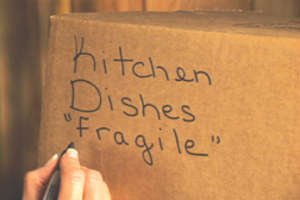
Sort, purge, pack tight, tape.
Mark books or china,
heavy or fragile
our life boxed away.

A fat black marker,
obliterates the item from my list,
one less thing to do,
one step closer.
The rhythm carries me,
keeps me numb.

Pretend with me.
Let the catch in my voice
go unnoticed,
my emotions contained.
Just one word of kindness
will shatter my resolve.

I cannot believe that I have not written a word here in over six months. Perhaps I should break that statement up. I can’t believe that I have not written, period. And I can’t believe it is nearly six months.

Externally, nothing has changed. We remain unsettled, searching for employment so that we can have our own home again. But internally, where it counts, there’s been growth and healing. The battle isn’t over, but we feel like survivors. More than ever before, we recognize the strength of our union. Not all marriages could have withstood all that we have. We make a damned good team.

It’s easy to gloss over the difficulties we’ve experienced. Grief, worry, regret – every negative thought that had plagued us for over two years continued to lurk in the background these past months, waiting for those times when we seemed most vulnerable. Late night drives into our current subdivision brought flashbacks of the night of our move, and caused me to have panic attacks. I couldn’t sleep. Food suddenly caught in my throat as I ate. I was drowning in guilt over what I should have done differently. My husband was obsessed with feelings of failure. Gradually, though, we collected an arsenal of “weapons” to combat the pain we’ve felt. Such is survival. It’s instinctive.

The day-to-day needs of our new household became our lifeline. Mindless chores kept us from dwelling on our situation. We took our sweet little dog on long walks through the subdivision, the nearby park, the trails winding their way through the protected forests of the Oak Ridges Moraine. We compared one home’s choice of landscaping to the next, and laughed as our dog compulsively left his mark on every pole and tree he could find. It’s hard to stay depressed as you watch a tiny shih tzu attempt world domination in a half-hour walk.

There were times when we allowed ourselves to hope: the possibility of a contract being extended; companies that expressed interest in consulting contracts; success on the first day of a new sales job; a third interview for a new position that was a perfect fit. But inevitably, there were disappointments. A contract ended; a company decided against consulting when they checked their books and saw another month “in the red”; the realization that customers simply weren’t buying Toyotas, and that seeing just one customer a day left him earning less than minimum wage; a sudden silence after a third interview, and the suspicion that the only edge another candidate likely had on him was being younger.

Each time, we searched online for homes near these positions, so that if things worked out, we’d be ready to move. We collected a running list of “favourites,” keeping track of those that sold, and the new listings that came up. And when our hopes crashed, we learned to pull back for a while, stop looking, and give ourselves time to regroup. We read. We walked. We watched television and played mindless computer games. Did you know that Spider Solitaire can practically put you into a trance, if you play it long enough? I dreamed about playing it. It was better than not sleeping at all.

In many ways, those days in between the times of “hope” have felt timeless, a sort of limbo. Forced to live just in the moment, unable to predict the future and not wanting to revisit our past, our sense of time feels altered. One day melts into the next. We’ve been neither here nor there, our lives somewhat on hold, and subconsciously, I guess we’ve sometimes fooled ourselves into thinking the rest of the world has stopped as well. For example, summer was over before we knew it, and with that came a wardrobe dilemma I’d never anticipated. I never expected that we’d live with our friend so long, so I’d only brought summer clothing with me. When temperatures dropped in October, we drove to the storage facility to collect my warmer clothes, only to learn that the bins they were in were virtually inaccessible, lodged under and behind large pieces of furniture and boxes that couldn’t be moved. It was one more reminder of just how “out of sorts” our life felt.

Certain dates have also jolted us into reality and reminded us of the awkwardness of our situation. The first day of school, and no longer connected to that day as a teacher or parent; Thanksgiving, and the effort needed to show thankfulness; no longer preparing for Hallowe’en; and then, more than any other day, Christmas.

The first reminder saying “Just forty days left to shop for Christmas” was like a sucker punch. I felt sick and even more than that, I wondered how I’d possibly get through the day without becoming weepy and maudlin, ruining Christmas for everyone around me. I thought of our Christmas decorations stored away, how I loved to make our house look festive, the many friends who used to visit us, and Christmas morning, when my younger son and his girlfriend would arrive to join my husband, my oldest son, and myself to exchange presents. Where would we meet this year, with no family home to call our own? Whenever I allowed myself to dwell on the situation, my sadness grew, so I pushed it out of my mind, compartmentalizing it into the part of my brain reserved for regrets and losses.

Then I went shopping.

And in the end, Christmas was as it should be. Free of the massive debt we’d accumulated, Christmas didn’t carry the usual worry for us. We exchanged gifts in the morning with our friend and his family, and then we shared a hearty Christmas brunch casserole I’d made the night before, along with hot cinnamon buns, orange juice, egg nog, and coffee. In the afternoon, I prepared dishes to take to my sister’s for Christmas dinner, then arrived to find her house sparkling with decorations and filled with family and the laughter of children. My son and his girlfriend were able to join us, and though we missed exchanging gifts under our own tree, as we always had, nothing could touch the happiness we felt at having them there with us. Joy bubbled inside me until I worried it might spill over in blubbering sentiment and embarass the men in my family. I held it tight inside, something precious and wondrous that no one could take away.

Philsophers say that all growth comes from pain, that clarity of thought is the gift you are left with when the trappings of material wealth are no longer clouding your vision. For so long, I’ve worried and agonized and despaired and grieved over the changes in my life. I’ve felt detached and disenfranchised. I’ve used the solitude of the shower to shed my tears. I don’t ever want to feel that way again.

I know that our difficulties are not over, that our situation is far from settled, but I also recognize the gifts I have gained. I’ve had seen the good in people in unexpected gestures of kindness and generousity’ and that has strengthened my spirit and resolve. I’ve arrived at a place where I can look at the worst that might happen in our lives, and still say with all conviction “I am blessed.”
For those who’ve wondered what’s going on, life is very changed, but I am still living it. You will hear from me this week, I promise. It can’t wait any longer than that. I have so much in my head that needs to be written. Spontaneous combustion is a possibility if I don’t let some of it flow out and onto the paper.

This past week has been the most emotionally and physically exhausting time of our lives. We’ve sold our house and moved into the home of a very dear friend. We are thankful for his generosity, but are grieving, nonetheless. A part of us is gone. For the first time in our lives, we have no home to call our own.

People quickly find metaphors for times like this. They say that selling our home to correct our financial situation is like an amputation – painful, but necessary to our survival. Someone has said that we exchanged an “ace, two, four, six and seven” for a “two queens, two jacks, and a ten.” Play the hand correctly and maybe we’ll last the entire game.

We’ve imagined the sinking ship, the jump to a lifeboat. Even more so, I found myself comparing our situation to the evacuation of civilians in a war-torn country. Like them, we ran out of time to think. We threw out what we could not carry: items too bulky to transport, some of sentimental value, some, to our frugal minds, still salvageable. We balanced the replaceable value of an item against the cost of storing it; the sentimental value of one keepsake versus another, knowing one would be thrown out. There were sad goodbyes and outbursts of grief that surprised even us. In between, we held on to the sensible logic of the move. “This house is too large for us now. The new owners will be so happy here.” All of it true.

There can never be enough hours to move what amounts to a lifetime of possessions and memories. We filled a twenty cubic foot garbage bin in our driveway, two sixteen foot storage units, and still had to drive five carloads of goods to our friend’s home, forty-five minutes away. We arrived at three a.m.. While others were asleep, we tiptoed inside (limped might be more accurate), dug for nightclothes in hastily packed suitcases, and tried to sleep. My husband’s exhaustion won over and he was snoring within minutes. I lay awake, unable to stop the thoughts looping through my head: the way things used to be and how it came to this, and even more, would we get through it? I closed my eyes and replayed our visit to the lawyer earlier in the week: the look of compassion on his face when he heard about our situation; his quick glances at my husband between each clause of the contract, as he probably imagined himself in our shoes. I heard the words that seemed so out of place as we signed our house away. He said “Life is a journey.” I remembered the way he shook my hand and held it just a little longer than necessary. “Good luck,” he said. I avoided his eyes, because if I looked into them and saw sadness or pity, I would have crumbled.

So here I am, four days after our move, lucky enough to be welcomed into our friend’s big, comfortable home, but still “bleeding on the page,” as someone once said, and likely embarrassing myself. But it is honest and it is real and it is all I know how to be. Faking cheeriness right now isn’t possible.

Those of you who’ve been reading this blog since its start might say that this is our roadblock, the biggest one we have ever faced, and that the detour ahead leads to a much better place.

I hope you are right. We are more than ready for a fresh start.

I am in overdrive. I feel an inner trembling, the fluttering of a heart that’s beating too quickly. My mind is all over the place, thoughts rushing in at lightning speed, reminders of things I have yet to do: notifying the post office, the bank and our creditors of our address change, cancelling our phones, our satellite service, our property insurance. I am so rushed that I have stopped mourning the sale of our home. There is no time for it.

We move in just six days.

Allowing just four weeks to pack and move out is something I will never do again. Packing goes quickly when you’re taking everything you own. In our case, we have loads to get rid of, and loads we can’t bear to leave behind. Everything I pick up to pack must go into one of five groups:

1. Things we will need for the interim while we are living with our friend “M.” Thank goodness for him!

2. Stuff (a lot of it!) that we will store until we find our a new place.

3. Things my son will try to sell at a garage sale on Saturday.

4. Things we will give away to charity, mostly clothes and dishes

5. The rest, garbage for the dumpster that sits in our driveway.

Tomorrow, the first of our storage units will be delivered. It’s a very cool system. We pack it to the rafters and then call the company to pick up the first unit and deliver the second. The plan is to move on the 14th.

And all I can think of is “I’M NOT READY.” Forget the fact that my emotions are all over the place. I am not finished packing. There is food in the fridges to use up. The pantry is nearly, and the freezer has a few things we’ll either have to give away or force ourselves to eat: frozen pizza, perogies, two bags of a cheese/pasta/vegetable concoction. There are hamburgers and loads of ice cream, frozen vegetables, frozen bread and buns – most of which is already in freezer-burn hell.

My son is handling the garage sale and it will be casual, at best. If he had his way, he’d grab our stereo system and bookcases and extra television to sell. If I had my way, I’d sell his hundreds of magazines. I’d also sell a lot of things my husband wants to bring, like his desk, and his handbuilt solid cedar water wheel, a mere six feet in diameter, his 30 year-old car manuals. He’d toss out my older nightgowns and shirts he doesn’t like, and most of my books would disappear. Last night, his “sentimental gene must have been asleep at the switch – he started to throw away mementos from our sons’ school days: drawings, projects, a Grade 3 journal. My son was horrified, my husband stupefied, and me, I was simply fried (it’s been HOT here). There is no truer line than “One man’s garbage is another man’s treasure.”

I need to get to bed now because tomorrow has an early start. I pray I drift off quickly. These days, I need a muscle relaxant and sleep medication to get a solid eight hours’ rest (sleep pattern difficulties and muscle stiffness and pain is part of fibromyalgia, a chronic condition that can make me pretty miserable and whiney – but that’s another story, just as tedious to write as to read read.) The good news is that the meds do help a little.

Thank goodness, because tomorrow we are even more under the gun. If we’re crazy busy, I’ll have less time to feel sad. I might even manage without my daily little cry. And that’s a good thing. That’s progress, isn’t it?

I want to write, but tonight the words refuse to cooperate. Not the way I want them to, at least. they all sound repetitive, a melancholy refrain that drips of self-pity, of loss, of disillusionment. People are tired of hearing it. I am just as tired of feeling it.

Denying that the feelings exist is pointless. They are just below the surface of my every waking minute. I pour cereal into a bowl and think of grocery lists, of the things we need or the next few days and the things I won’t bother to replace. I work hard to stay detached, business-like, because if I don’t, I lose my focus and become immobilized.

Each item I pack carries a memory. I find letters from my boys when they were little, a note my mother wrote to me on my honeymoon. I find loose pictures I’d thought lost, and I study each as if they’re a masterpiece: the expressions on faces, what people wore, remember what they said that day, what we laughed at. And immediately, I wonder if our quota of “fun” has already been met. Maybe those were the “good old days” and now, our happiness ration is depleted.

There is such a sense of detachment when you go through a serious financial downturn like this. People you thought were your friends drift off. They suffer survivor guilt and often would sooner stay away and hope things get better for you, than come around and deal with your feelings.

That isolation has been horrible. We think of moving now and know we need to be closer to people, people who won’t know our history and won’t feel sorry for us, people who will accept or reject us on the basis of who we are today, not who we were twenty years ago, and certainly not as the ones who “lost so much.”

We do not want pity. We only want a chance to show what we can do, and prove we’re still worthwhile employees, friends, citizens.

I’ve said more than I intended. My angst overflowed. Bu wow, this is a difficult time, and I find myself staying up late in a silly attempt to delay another day. Our move is coming so fast, and God help me, I am worried over how I will handle it. I feel like I could melt into a puddle of pathetic need. I’ve met older women who are obsessed with things lost: their face, their figure, their fortune, and always, men. I aspired to be better than that – stronger, invinvicible, kind of the way you’d expect Mrs. Obama to handle a situation similar to ours. Could she maintain her dignity or would she turn into a big sweaty lump of blubbering sadness? I know it’s what I sometimes feel like doing, but it’s not what I want.

Sometimes, our resilience and personal strength can surprise even ourselves. Maybe I’ll be lucky and that will happen with me. Right now, I’m much closer to feeling down and out. Tomorrow will be better. Everything looks brighter in the sunshine.

This week will be bad enough. I don’t want the added upset of knowing I made everyone around me feeling ten times worse, simply because I couldn’t contain my own feelings.

So I go back to my initial comment. I need to find a way to turn off my mind, without resorting to a sleep-induced coma. There’s no way I could pack and clean if I couldn’t move. Mind you, a temporary coma does holds a certain appeal.

Today was our thirty-ninth anniversary. It marked more than our thirty-nine years together though. It defined our point of transition, because today the young couple who are buying our home visited us, and our upcoming move became real.

For two months now, we’ve had to keep their identity a secret from our neighbours. The reason? The wife, who I’ll call “T,” grew up on this very street, just two houses down from us. She went to school with our sons. Her parents still live down the street. And more than anything, she and her husband “P” wanted to surprise our wonderful neighbours with the news that they will be moving into our home. Today was the day.

Could it feel more right? For twenty-four years, we have lived and loved in this home. It isn’t perfect, but it’s part of us, and one of the hardest things about moving was the idea that the new buyers might neglect it, or divide it into apartments as a business venture. Then we learned exactly who the new owners would be, and it was kismet. Bittersweet, but sweet nonetheless. This house will be loved.

While we women chatted, my husband walked the property with the young man who would soon be its owner. He already has plans for what he will do: a treehouse here, extension there, gazebo where the old poolhouse stands. My husband said the conversation reminded him of his own dreams when we bought all those years ago.

There was sadness, which we tried our best to hide. But there was also acceptance and happiness for this young couple. This home needs the spirit that their family will bring. As for us, it really is the right time for us to leave and begin a new chapter in our lives.

Tonight we celebrated our anniversary at a local Italian restaurant. We talked of what the future might bring, of the kind of life we want to live. Right now, it is surreal and a little frightening. We can’t help but compare it to abandoning a sinking ship. For three years, we plugged leaks and bailed out water, but it wasn’t enough. Now we have a lifeboat that’s seaworthy, at least for a while. We just have to find the shore.